


In Northern Thailand, “elephant sanctuary” is one of the most overused, least regulated labels in tourism. Around Chiang Mai, you can find everything from true observation-led projects where elephants choose distance and pace, to attraction-style parks selling mud baths, river bathing, and “hands-on” selfies under the same comforting word. In 2026, the clearest line for travelers is simple: prioritize observation-only experiences that avoid riding, bathing, and other forced close-contact activities, and evaluate each venue by how much autonomy the elephants actually get, not by how good the marketing sounds.
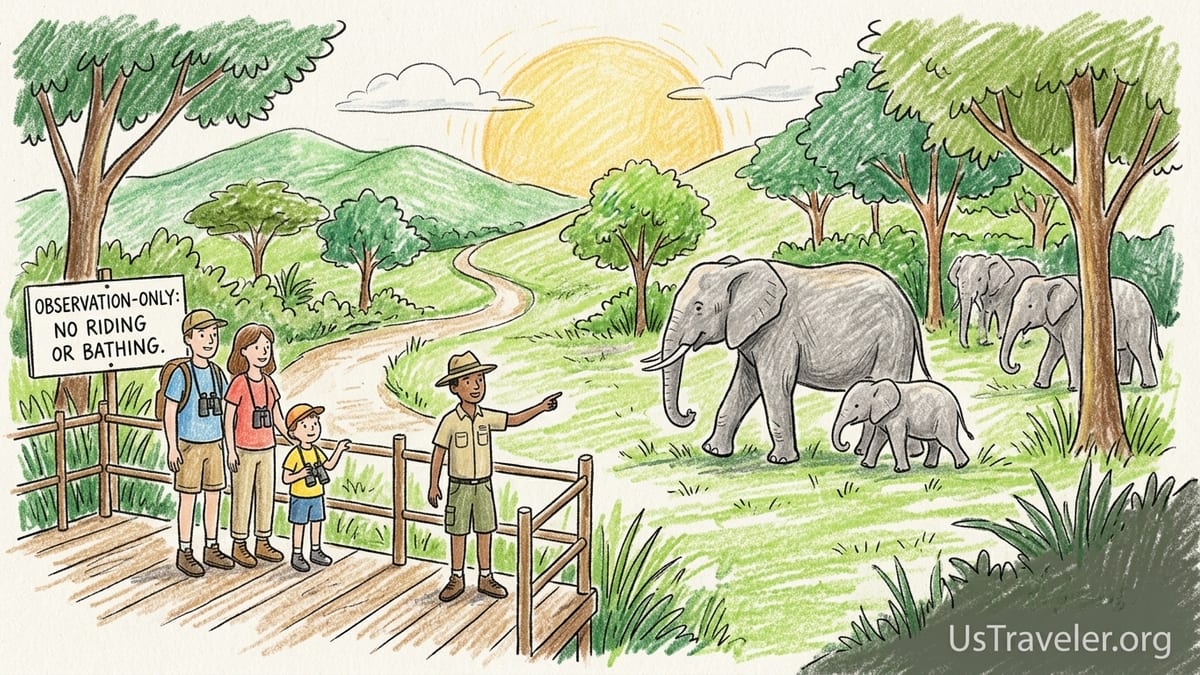
What “ethical” means in 2026: observation-only, elephant autonomy, and no forced contact
World Animal Protection’s 2026 guidance is explicit about what travelers should avoid: elephant riding, bathing, and other activities built around close contact that can pressure animals into compliance. The highest-welfare model is observation-only, where visitors watch elephants behaving naturally with minimal disturbance, and where staff manage safety and distance without turning the elephants into props.
In practice, observation-only is not just “no riding.” It means the day is designed around elephant choice: elephants decide whether to approach, where to walk, when to feed, and whether to rest. It also means tourists are not part of the elephants’ daily routine through constant hand-feeding, posing, hugging, or touching. A venue can be calmer, quieter, and less “Instagrammable” while still being far more ethical, because the elephant is no longer performing.
For travelers, the hardest adjustment is expectation. An ethical visit may include long periods of watching from a platform or trail, with guides interpreting body language, social dynamics, and habitat use. If a tour pitch promises “maximum interaction” or sells bathing as “natural,” treat that as a welfare red flag, not a perk.