


Northern Thailand rewards travelers who choose the right base. Stay in Chiang Mai city when you want temples, night markets, cafés and easy transport. Move out to Mae Rim when you want rice-field views, destination spas and true resort quiet. Use Chiang Rai for riverfront calm and day trips to the White Temple, Blue Temple and Golden Triangle routes. And in Pai, prioritize walkability and a boutique vibe, because the whole point is slow mornings, sunset viewpoints and nights that end early. Below is a destination-by-destination, trip-style guide to some of the most bookable, best-known hotels and resorts across Chiang Mai, Mae Rim, Chiang Rai, Pai and a handful of mountain retreats, with real-world notes on pools, spas, restaurants, views and whether staying outside town creates too much driving.
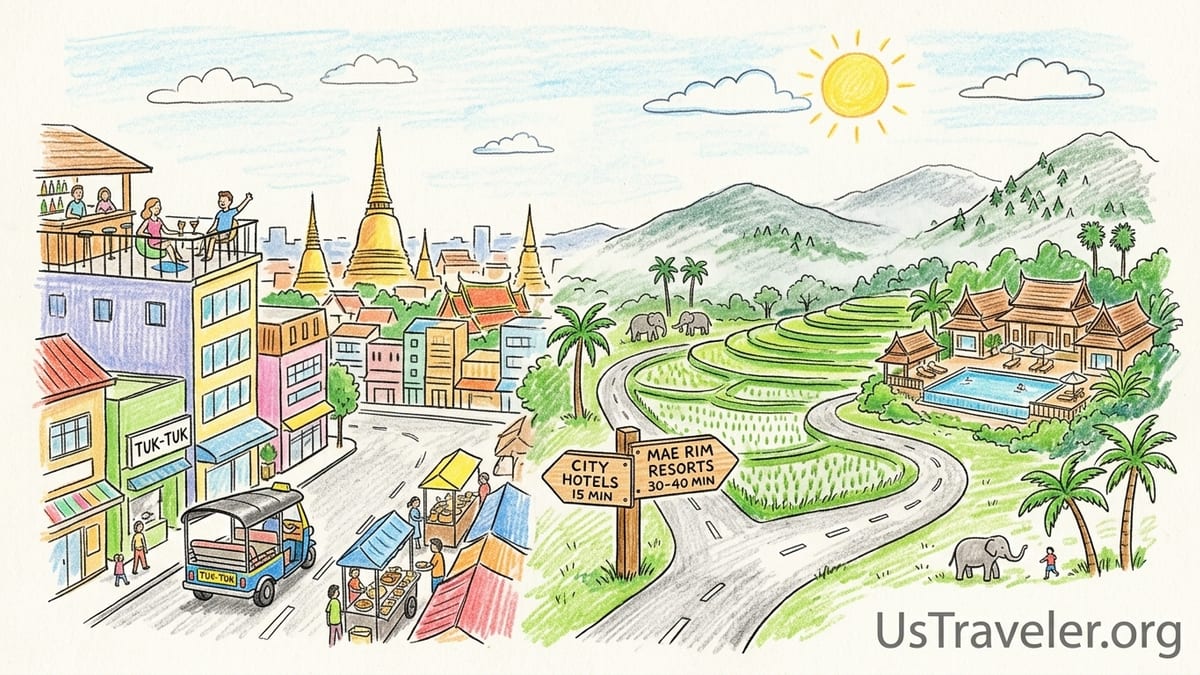
Chiang Mai City Hotels: Walkable Culture, Rooftop Views, And Easy Transport
If you plan to spend your days moving between the Old City’s temples, Nimman cafés, the Sunday Walking Street, and evening food stalls, a city hotel is the least stressful choice. It keeps your trip flexible: a 15-minute break by the pool or in your room is actually possible, and you avoid turning every dinner into a transport decision. For most travelers, this is also the best strategy for short stays of two or three nights, or for anyone arriving late and leaving early, because you are closer to Chiang Mai International Airport and the city’s main services.
For a modern, full-service base with a strong “city plus comfort” balance, Meliá Chiang Mai is frequently chosen for its rooftop scene and skyline views. Recent pricing snapshots on major booking platforms have shown rooms around the mid-$100s to low-$200s per night depending on dates and room type, and guest feedback often highlights the sunset angle from the rooftop bar, plus a strong breakfast spread. The value proposition is simple: you get a contemporary room, a proper pool, and an elevated place to end the day without committing to a resort commute.
If you want a heritage-leaning luxury stay that still behaves like a city hotel, InterContinental Chiang Mai The Mae Ping is a strong pick for travelers who care about on-site dining and a polished lobby-lounge rhythm. It is built for nights when you want to dress up a little, linger over cocktails, and still be back in your room quickly. The trade-off versus smaller boutique properties is scale. You get the benefits of multiple restaurants and bars, but it will feel more like a high-end international hotel than a small Lanna home.
For boutique travelers who want to be inside the Old City’s daily flow, The Inside House is a memorable option known for intimate, design-forward rooms and a more “special occasion” feel even on a short trip. It is the kind of hotel you book when you want mornings that start slow and photogenic, and when a smaller property is part of the experience. As with many popular boutique hotels, availability can be tight on certain date windows, so it rewards early planning if your Chiang Mai dates are fixed.
Mae Rim Luxury Resorts: Rice Fields, Mountain Backdrops, And True Destination Stays
Mae Rim is where North Thailand’s luxury-resort market really flexes. The setting is the headline: rice paddies that shift from mirror-bright greens to harvest gold, plus misty hills that make even a simple breakfast feel like a “retreat.” The experience is also more self-contained: you book for the pool, spa, gardens, and on-site restaurants, not for hopping between neighborhoods. That is perfect for couples on a slower itinerary, families who want space, and travelers building in recovery time after Bangkok or long-haul flights.
Four Seasons Resort Chiang Mai is the most recognizable example of the Mae Rim archetype: a high-end resort with rice-field views and a mountain horizon. The property itself openly emphasizes the Mae Rim Valley setting, with architecture that leans into northern Thai style and accommodations oriented toward paddies and hills. The key practical note is transport. It is commonly around a 30 to 40 minute drive to Chiang Mai’s Old City in light traffic, and in busier periods you can easily turn “a quick dinner” into a longer outing. If your trip is built around night markets, cocktail bars, and spontaneous restaurant choices, consider splitting your stay: a few nights in town, then Mae Rim for the unwind.
Raya Heritage is another Mae Rim favorite for travelers who want something quieter and more design-led, often described as soulful rather than showy. It is a good match for travelers who care about textures, craft, calm pool time, and spa-forward afternoons. One practical detail to watch when booking any resort stay is scheduled maintenance: properties sometimes close pool decks or sections for refurbishment during short windows, which matters a lot when the pool is a main reason you booked the countryside in the first place.
Mae Rim also supports a broader range of resort price points than many first-time visitors expect. You can find full resort experiences that are meaningfully less than the ultra-luxury flagships, especially in shoulder and green-season windows. The real decision is not only the nightly rate but also how you plan to eat and move: once you commit to a destination resort, you either dine on property more often or you budget for regular drives into town. If you want Chiang Mai nightlife and street-food spontaneity every night, Mae Rim can feel like you are constantly commuting away from your own room.
Chiang Rai River And City Hotels: Calm Stays With Easy Day Trips
Chiang Rai is calmer than Chiang Mai, and many travelers like it for exactly that reason. It is a base for unhurried mornings, riverfront sunsets, and day trips to the White Temple (Wat Rong Khun), the Blue Temple (Wat Rong Suea Ten), and countryside drives toward tea plantations and the Golden Triangle routes. The accommodation pattern tends to split into two styles: riverfront resorts that feel like a contained escape, and city hotels that keep you closer to restaurants and quick transport.
Le Méridien Chiang Rai Resort is one of the better-known riverfront options, set along the Mae Kok River with grounds designed around the water and mature trees. Many rooms are positioned for garden or river views, and the overall tone is “resort calm” rather than “city hub.” If you are the kind of traveler who wants a proper pool, a comfortable breakfast routine, and a hotel that can absorb an afternoon when the weather turns, this style works well in Chiang Rai.
For a more city-adjacent resort feel, The Riverie by Katathani is positioned close enough to key city landmarks that you can do a quick hop for dinner or a market visit, yet still return to a property that reads as a resort. This is often the sweet spot for families, because you can combine pool time with day trips without adding too many logistics. The practical advantage versus staying farther outside town is simple: fewer “dead hours” in the car when you just want to grab something easy to eat.
If your Chiang Rai plan includes river atmosphere but you also want a boutique-leaning experience, The Legend Chiang Rai Boutique River Resort & Spa is another recognizable choice. When comparing these riverfront properties, look closely at the shape of the pool (some are more for lounging than lap swimming), the spa menu depth, and whether the restaurants are varied enough for multi-night stays. Chiang Rai’s restaurant scene is improving, but it is still common for travelers to eat at their hotel more often than they would in Chiang Mai, so the on-site dining program matters.
Pai Boutique Properties: Small-Scale Charm, Walkability, And Two-Pool Days
Pai is at its best when you are not trying to over-plan it. The town is small, the roads are curvy, and the travel mood is slow. That makes walkability a major “hidden luxury.” If you can stroll to dinner, stop for a mango smoothie, and still be back by the pool quickly, you get the Pai experience people imagine. If your hotel is too far out, you can end up spending more time arranging rides than enjoying the valley.
Reverie Siam is a standout for travelers who want a boutique stay with a resort feel. The property is known for a strong visual identity and a pool-forward day, and booking platforms often highlight features like multiple outdoor pools and an all-day restaurant. Recent rate displays have shown a wide spread depending on date and deal structure, with some discounted nights appearing around the low-to-mid $100s. In practice, that means it can be a splurge on one week and a surprisingly good value on another, so it is worth checking your exact travel dates rather than assuming a fixed tier.
In Pai, the “pool question” is not only about temperature and deck space. It is also about timing. Many travelers do morning cafés, then return for a midday pool break when the sun is strong, then head out again for a late afternoon viewpoint and night market snacks. Hotels that make that rhythm easy, with a comfortable room, shade, and a restaurant you actually want to use, tend to feel like the best booking decisions even if they are not the cheapest.
One more practical point: Pai is small, but it is not flat. If you are traveling without a scooter and you do not want to rely on ride-hailing or taxis at night, prioritize staying closer to the center. If you do have a scooter and you are confident riding, a more secluded boutique stay can work, but remember that evening rain showers can make the “quick ride back” less appealing than it sounds when you are booking months ahead.
Mountain Retreats: Cooler Air, Big Views, And The Driving Trade-Off
North Thailand’s mountain retreats are for travelers who want the scenery to be the itinerary. These stays make sense when you are deliberately stepping away from city energy, or when you want cooler air, quiet mornings, and a stronger connection to the landscape. They are especially popular for wellness-minded trips where the spa, walks, reading time and early nights are the point, not an afterthought.
In the Chiang Rai region, a well-known example of the mountain-retreat idea is Four Seasons Tented Camp Golden Triangle. It is positioned as an all-inclusive, nature-immersive stay set in lush surroundings, and it is often booked as a “once-in-a-lifetime” splurge rather than a standard hotel choice. The most important planning note is that this kind of experience is not designed for constant in-and-out day trips. You go to be there. If you want to see multiple temples, cafés, and museums every day, a city base in Chiang Rai is easier. If you want a bucket-list nature stay where meals and activities are part of the package, the tented-camp model fits.
For travelers who want mountain scenery without going full expedition-style, the broader Chiang Rai countryside also has more classic resort options in elevated settings. Properties in this category tend to emphasize views, spa programs, and restaurants that can carry several nights of dining. The key question is always the same: how much car time will you tolerate? A mountain retreat can feel magical at check-in, then feel inconvenient if you are doing long drives twice a day for meals and sightseeing that could have been done from a closer base.
To avoid regret, match the retreat to your trip style. If your ideal day includes a slow breakfast with fog lifting off the hills, a massage, a swim, and an early dinner with a view, go mountain. If your ideal day includes temple-hopping, market grazing and trying three different restaurants, keep the mountains as day trips and stay in town. For many travelers, the best compromise is a split stay: two nights in a city hotel for exploration, then two nights up in the hills for reset time.
Selected Historic-City Stays: Heritage Character Without Resort Isolation
Some travelers want a hotel that feels rooted in North Thailand’s history without leaving town. This is where “historic-city stays” shine. You are still close to cafés, galleries and markets, but your hotel experience feels more textured than a standard tower. It is an approach that works particularly well for first-time visitors who want Chiang Mai’s energy, plus a place that feels special when you come back in the evening.
137 Pillars House in Chiang Mai is a strong example of this style. It is widely known for a more intimate, heritage-leaning atmosphere and suite-forward accommodations. Practical perks include a more boutique sense of privacy, plus a spa program that is straightforward to schedule into a city day, since you are not battling a long return drive from the countryside. It is the kind of hotel where you can do an early temple visit, return for a quiet swim and massage, then head back out for dinner without turning the whole day into a transport plan.
Another benefit of this category is the ability to mix on-property and off-property dining. In a destination resort, you often feel nudged toward hotel restaurants because they are convenient. In a historic-city hotel, you can treat the hotel restaurant as one highlight, not your only realistic option. For travelers who want to eat broadly across Chiang Mai’s food scene, that flexibility is a big part of the value.
When you are deciding between historic-city and countryside resort, ask yourself one honest question: are you traveling to be entertained by the city, or to be cared for by the property? If the answer is “both,” the best North Thailand itineraries usually split the stay. Do Chiang Mai in the Old City or river area first, then take your luxury nights in Mae Rim or farther afield once you have checked the main sights off your list.
The Takeaway
The best hotel choice in North Thailand is rarely about a single “top property.” It is about matching your base to your daily rhythm. Chiang Mai city hotels win for walkability, food, and flexible sightseeing. Mae Rim wins when you want rice-field and mountain views, destination spas, and a resort that feels like a trip in itself, with the clear understanding that you will drive for many city dinners and nightlife. Chiang Rai’s riverfront resorts are ideal for calm days and easy temple day trips, while Pai rewards travelers who book small-scale charm and center access. And if the mountains are calling, treat a retreat like a true retreat: fewer checklists, more time on property, and a plan that prevents your view-filled stay from becoming an accidental driving holiday.
If you are unsure, choose the split-stay approach that locals and repeat visitors quietly rely on: two or three nights in the city where you will explore, then two or three nights outside town where you will slow down. In North Thailand, that balance is often the difference between a trip that feels busy and a trip that feels unforgettable.
FAQ
Q1. Is it better to stay in Chiang Mai Old City or outside town in Mae Rim?
If you want temples, cafés, night markets and minimal transport planning, stay in the Old City or central Chiang Mai. Choose Mae Rim when the resort itself is the priority and you are happy to drive for city dinners.
Q2. How much driving does a Mae Rim resort add to a Chiang Mai itinerary?
In light traffic, many Mae Rim resorts are roughly 30 to 40 minutes from central Chiang Mai, but peak hours can stretch that. If you plan to go into town every day and return late, the commute can feel like a big part of the trip.
Q3. Which Chiang Mai city hotels are good for rooftop views and a pool?
Modern city hotels such as Meliá Chiang Mai are often chosen for a rooftop bar atmosphere and sunset views, plus a full-service pool setup that works well between sightseeing blocks.
Q4. Which Mae Rim resorts best match a “rice fields and mountains” luxury vibe?
Four Seasons Resort Chiang Mai is a classic example of the rice-field resort experience in Mae Rim, and Raya Heritage is another strong option for travelers who want a quieter, design-led luxury retreat.
Q5. Are Chiang Rai riverfront resorts worth it if I only have two nights?
Yes, if you want a calmer base with pool time and easy day trips to major sights. If your goal is to maximize dining variety and urban evenings, a more central city hotel can be more convenient.
Q6. What is a good Chiang Rai resort-style hotel near the city?
The Riverie by Katathani is often used as a city-adjacent resort base, with the advantage of being close enough for quick trips to restaurants and landmarks while still feeling like a resort.
Q7. In Pai, should I stay in the center or outside town for views?
Most travelers are happiest near the center for walkability to dinner and the night market. A more secluded stay can work if you are comfortable with scooter rides and do not mind arranging transport at night or in rain.
Q8. What is a recognizable boutique resort choice in Pai?
Reverie Siam is a well-known boutique option, often noted for a strong design identity and multiple outdoor pools, making it a good fit for travelers who want resort comfort without leaving Pai’s easygoing vibe.
Q9. Are mountain retreats in the Chiang Rai region practical without a car?
They can be challenging without pre-arranged transport because distances are longer and options are fewer at night. If you do not want to hire a driver, a Chiang Rai city or riverfront base is usually easier.
Q10. What is the smartest way to book North Thailand hotels if I want both city life and resort downtime?
Plan a split stay: start with Chiang Mai city for sights and food, then move to Mae Rim or a mountain retreat for two or three nights of pool, spa and scenery. It reduces daily driving and makes both experiences feel intentional.