


Thailand’s eastern Gulf coast is built for an easy, commercially useful road trip: short daily drives, reliable highways, and enough shoreline detours to keep the journey feeling like a holiday instead of a transit day. This guide follows a clean coastal line that works for most travelers and most rental contracts: Bangkok → Chonburi (Bang Saen, Sattahip, Bang Saray) → Rayong → Chanthaburi → Trat. Islands are handled as add-ons rather than forced into the driving plan, so you can finish the coast comfortably and then decide whether Koh Chang (or other islands) deserves its own stay.
Before You Go: Rental Cars, Documents, And What “Road Trip Ready” Means In Thailand
For this route, the biggest practical decision is where you pick up the car. If you arrive internationally, Suvarnabhumi Airport is the simplest: the major brands operate there and many travelers choose an airport pickup to avoid Bangkok taxis and to get on the highway quickly. Expect to present your passport, a credit card in the driver’s name, and an International Driving Permit alongside your home license if your license is not in English. If you are already in Bangkok, downtown pickups can be cheaper, but airport counters often have better English support and clearer opening hours.
Real-world pricing changes by season, vehicle type, and how far ahead you book. To keep your budget realistic, plan on economy and compact cars being the most common deals, with automatics typically priced higher than manuals. If you are traveling as a couple and carrying beach luggage, a small sedan is fine. If you want to detour into fruit orchards, mangrove boardwalks, and viewpoint pullouts with uneven shoulders, a compact crossover can feel more relaxed, especially in the rainy months when shoulders get soft.
Insurance and restrictions matter more than horsepower on the Eastern Gulf. Read the “driving restrictions” and “ferry” sections of your agreement before you pay. Some international brands and specific contract codes restrict taking vehicles on ferries, and if you ignore that, you can void coverage and become fully liable for the vehicle. If Koh Chang is a strong “yes,” choose a rental company and a rate plan that explicitly allows public car ferries, or plan to park on the mainland and transfer as a passenger.
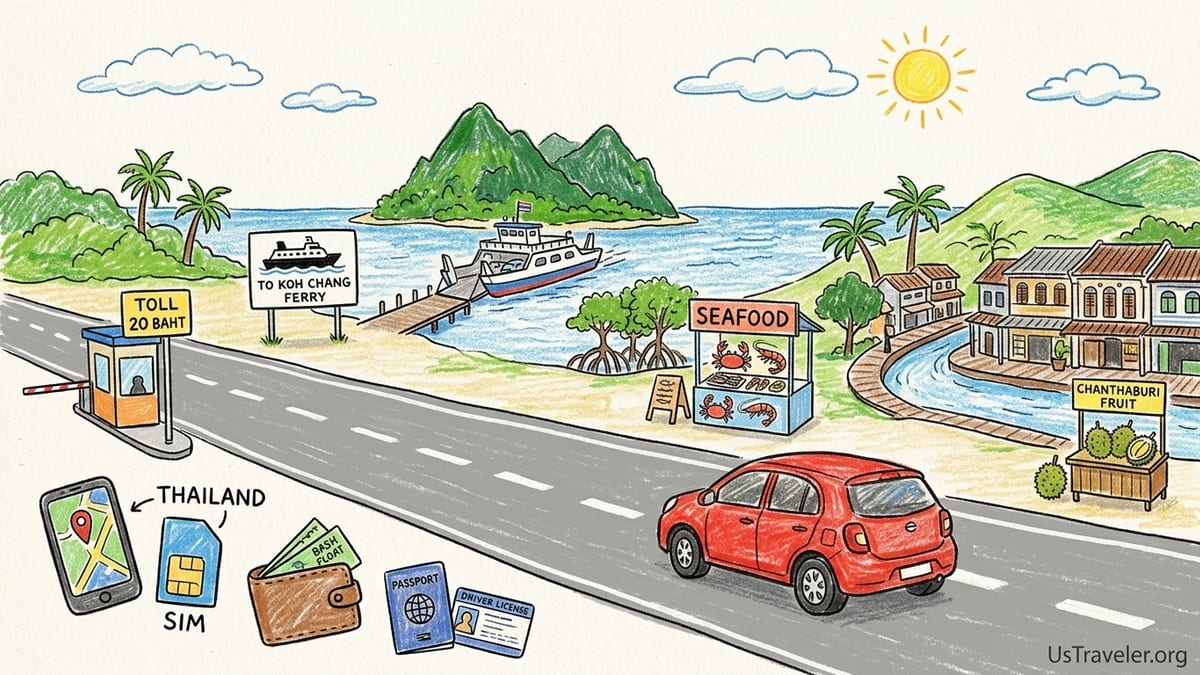
Two small choices make the drive smoother. First, get a Thai SIM or eSIM on day one so your navigation and translation work without drama at toll booths or hotel check-ins. Second, keep a small cash float (think a few thousand baht) for parking, snacks, and rural fuel stops, even if you mostly use cards in cities.
The Core Drive: Highway 3 (Sukhumvit Road) Versus Faster Motorways
Thailand’s Highway 3, better known as Sukhumvit Road, is the historic spine of the Eastern Seaboard. It ultimately runs from Bangkok through Chonburi, Rayong, Chanthaburi, and Trat toward the Cambodian border. For travelers, it is the most intuitive “one road that always works” option. It also passes towns, markets, and beachfront access points that you would miss if you only chase expressways.
That said, the fastest way out of Bangkok is often not Highway 3 itself. Many drivers use the elevated and toll routes to break free of the capital’s traffic, then reconnect with Highway 3 as the suburbs thin out. In practical terms, the coastal experience starts after the industrial outskirts, when you can choose between staying inland for speed or slipping down to the sea for beaches, piers, and seafood.
Use Highway 3 as your default reference line, then treat coastal roads as “optional scenic layers.” On a 4 to 5 day plan, you will have time for both, but only if you avoid over-planning. A good rhythm is to drive early, arrive before lunch, check in, then spend the afternoon on detours that do not require big backtracking.
One more reality check: Highway 3 can be busy around industrial estates and commuter belts, and it can feel stop-start in town centers. If you are aiming to be in Chanthaburi old town before sunset, do not leave Rayong at 3 p.m. and assume you will “just cruise.” Build in buffer time, especially on Fridays and Sundays.
Bangkok To Chonburi And Bang Saray: A Soft Launch With Beach Time And Markets
The first leg works best as a “soft launch” day: minimal sightseeing in Bangkok, then 1.5 to 3 hours to the coast depending on where you start and what time you escape the city. Chonburi gives you choices. Bang Saen is close and easy for a first beach sunset. Sattahip and Bang Saray sit farther south and feel calmer, with more of a local-weekend vibe than a nightlife hub.
If you want a classic road-trip stop that feels unmistakably Thai, aim for Nong Mon Market in Chonburi, a well-known place to browse snacks and seafood products right off Sukhumvit Road. It is the kind of stop where travelers naturally stock up on dried squid, crispy rice crackers, and sweet-and-salty treats for the car. The experience is also a reminder that this coast is a working food region, not just a resort strip.
Where to stay depends on your target mood. For a straightforward night that positions you well for Rayong, Bang Saray is useful because it keeps you moving south without committing you to Pattaya’s busiest pockets. If you prefer more dining options and a longer promenade for a jet-lag walk, Bang Saen is convenient, especially for travelers who want to keep day one easy.
In the morning, start early and resist the temptation to squeeze in too many attractions before Rayong. The win on this trip is not “collecting” places; it is arriving early enough to enjoy the coast at human speed.
Rayong: Seafood Stops, Quiet Beaches, And Detours That Feel Like Discoveries
Rayong is the Eastern Gulf’s sweet spot for travelers who want beach time without building their whole trip around a single resort. The shoreline gives you a mix of town beaches and longer, quieter arcs, and there is enough local life that dinner does not feel like it was designed only for tourists.
For a real-world seafood rhythm, plan one lunch that is intentionally “messy and local.” Around Ban Phe and the Mae Ramphueng area, it is common to find simple seafood restaurants where you point, order, and end up with grilled fish, steamed crab, stir-fried squid with basil, and a plate of prawns that makes you glad you did not over-schedule your afternoon. If you are traveling with someone who does not love spice, it is normal to request milder versions, but expect the coastal style to lean sweet-salty.
Rayong also works well for short nature detours that do not require a full-day commitment. A mangrove boardwalk visit is a classic example: you can stretch your legs, get strong light for photos, and still be back at your hotel for a shower before dinner. These small detours are the secret to making the drive feel like a journey rather than a line on a map.
Where to stay in Rayong depends on your next-day priorities. Beachfront properties near Mae Ramphueng can deliver the “wake up to the sea” feeling, while town stays make it easier to access supermarkets, coffee, and quick breakfasts before driving east. If you are heading to Chanthaburi old town for afternoon wandering, a town stay can shave time off your morning.
Chanthaburi: Old Town Atmosphere, Riverside Walks, And A Night Worth Keeping
Chanthaburi is the cultural pivot of this road trip. You are still on the Gulf, but the mood shifts from beach rhythm to riverside heritage, old shophouses, and a slower pace that rewards an overnight rather than a quick pass-through. The province is also well known in Thailand for gem trading, and the town’s history includes visible influences that show up in architecture and community life.
The heart of the visit is the Chanthaboon Waterfront Community, the riverside old town zone that travelers come to for wooden houses, small cafes, and a walkable historic atmosphere. The appeal is practical as well as aesthetic: you can park once, spend two to three hours wandering, then sit down for something cold and sweet when the afternoon heat peaks. If you arrive on a weekend, you may find more stalls and a livelier street feel, while weekdays can be quieter and easier for photography.
Food in Chanthaburi is not only seafood. This is also fruit country, and in the right season you will see durian, mangosteen, rambutan, and pomelo featured prominently. A real-world way to enjoy it without turning your day into a fruit tour is simple: stop at a reputable fruit shop, buy a small mixed selection, and treat it like your road-trip snack pack for the next leg.
Where to stay: prioritize a location that makes your evening easy. Old-town-adjacent boutique stays are ideal if you want to walk after dinner. If you prefer more standardized amenities and parking simplicity, a larger hotel on the town edge can be smoother. Either way, do not underestimate how pleasant it is to have one non-driving night here, especially if you plan to push to Trat the next day.
Trat: The Mainland Base For Koh Chang, Plus The Driving Finish Line
Trat province is where the coastal drive meets island logistics. If you are not going to Koh Chang, Trat still works as the eastern “finish line” for the road trip: you have completed the Gulf coastline route, you can slow down, eat well, and decide whether you want a border-region flavor or simply a quiet coastal night before returning to Bangkok.
If you are adding Koh Chang, treat Trat as your staging area. The key mainland zone is around Laem Ngop and the Ao Thammachat pier area, because that is where the car ferries operate to Koh Chang’s Ao Sapparot pier. In practical terms, this means you can choose one of two smart patterns: stay in Trat town for evening comfort and drive to the pier in the morning, or stay closer to the pier to reduce morning friction if you are catching an early crossing.
Do not force the ferry into a tight driving day. A common mistake is trying to drive Bangkok to Trat, catch a ferry, and then also cross Koh Chang to reach a west-coast beach before dark. It is technically possible, but it is the sort of plan that turns a holiday into a logistics drill. If Koh Chang is part of the trip, give it its own minimum two-night block so you are not living out of the trunk.
On the mainland, seafood remains the headline. This is a region where a casual waterside meal can be the best memory of the day. The practical advice is to eat near the water when you can, but keep an eye on timing: arriving at popular seafood spots at peak dinner hour on weekends can mean waits, and you do not want that stress on a day you also need to think about ferry rules.
Ferry-Terminal Logistics And Koh Chang Vehicle Rules: What To Know Before You Commit
The working assumption for most travelers today is simple: if you want a vehicle ferry to Koh Chang, you are using Ao Thammachat Pier on the mainland and arriving at Ao Sapparot Pier on Koh Chang. Travelers will still see older references online to alternative piers, but current practical planning should focus on the Ao Thammachat route for regular car and passenger service.
Plan the ferry as a flexible window, not a fixed appointment. In normal conditions, departures run frequently across the day, and the crossing itself is short. The real variables are traffic on the approach roads, queues during Thai holiday peaks, and how long it takes you to buy tickets, line up, and board. A safe, real-world habit is to arrive with extra time, use the restroom, buy water, and treat the ferry as a calm transition instead of a race.
The big question is whether your rental agreement permits taking the vehicle onto Koh Chang. There is no universal answer. Some rental terms explicitly prohibit ferries, and violating that can void insurance coverage and leave you responsible for damage, loss, towing, and recovery. If you want to bring a rental car, you need written clarity from the rental company for your specific booking, not a generic assumption that “people do it all the time.” If the answer is unclear, the commercially sensible option is to park on the mainland, take the ferry as a foot passenger, and use island transport or a local rental on Koh Chang.
If you do go without a car, the transition is still straightforward. Shared songthaew taxis meet arrivals at Ao Sapparot and run toward the popular west-coast beaches. Travelers should still keep expectations realistic: the island is mountainous, roads are curvy, and travel times feel longer than the map suggests. This is another reason to keep Koh Chang as a separate add-on block rather than squeezing it into a “driving itinerary day.”
The Takeaway
This eastern Gulf road trip works because it stays simple: Highway 3 gives you a reliable backbone, while the coast offers optional detours when you have the time and weather. Build your days around one main destination, keep afternoons for shoreline stops and seafood, and give Chanthaburi at least one night for its old-town atmosphere. Treat Trat as the finish line for the drive, and add Koh Chang only if you can confirm rental rules and you are willing to give the island its own time rather than cramming ferry logistics into a driving day.
FAQ
Q1. How many days do I need for the Bangkok to Trat coastal road trip?
Plan 4 to 5 days for Bangkok → Chonburi/Bang Saray → Rayong → Chanthaburi → Trat, not counting any islands.
Q2. Is Highway 3 the same as Sukhumvit Road?
Yes. Highway 3 is commonly known as Sukhumvit Road, and it is the main surface-road spine through Chonburi, Rayong, Chanthaburi, and Trat.
Q3. Should I drive on Highway 3 the entire way?
You can, but many travelers use faster toll routes to exit Bangkok, then reconnect with Highway 3 for coastal towns, markets, and beach access.
Q4. Where is the best first overnight stop after Bangkok?
Chonburi works well, especially Bang Saen for convenience or Bang Saray for a calmer base that keeps you moving south toward Rayong.
Q5. What is the must-do experience in Chanthaburi?
Spend time in the Chanthaboon Waterfront Community (old town) for riverside walking, heritage buildings, cafes, and local food.
Q6. Where do I catch the car ferry to Koh Chang?
The main car ferry route is from Ao Thammachat Pier on the mainland to Ao Sapparot Pier on Koh Chang.
Q7. Can I take a rental car onto Koh Chang?
Sometimes, but not always. Some rental agreements prohibit ferries and can void insurance if you cross. Get written confirmation for your specific booking, or leave the car on the mainland.
Q8. Is it easy to visit Koh Chang without bringing a car?
Yes. You can ferry as a passenger and use shared songthaew taxis from the pier to west-coast beaches, or arrange private transfers.
Q9. What is a practical seafood strategy on this route?
Schedule at least one intentional seafood lunch in Rayong and one seafood dinner in Trat, and avoid rushing by arriving before peak dining hours on weekends.
Q10. What is the biggest planning mistake on this road trip?
Trying to combine a long drive day with ferry boarding and a full cross-island transfer to a Koh Chang beach before dark. Keep islands as separate add-ons.