


Thailand’s resort map in 2026 is less about one “best hotel” and more about choosing the right kind of stay for the trip you are actually taking: a Phuket beach week with easy dining, a quieter Khao Lak reset, a Krabi cliff-and-lagoon escape, a Koh Samui villa holiday, a Hua Hin wellness program, or a Chiang Mai countryside retreat with rice paddies outside your balcony. This guide is built for booking decisions, comparing beach access, pool scenes, spas, restaurants, villa setups, airport transfers, and how isolated each property feels, using real-world examples travelers are booking right now.
How To Choose A Thailand Resort In 2026 (Before You Pick A Brand)
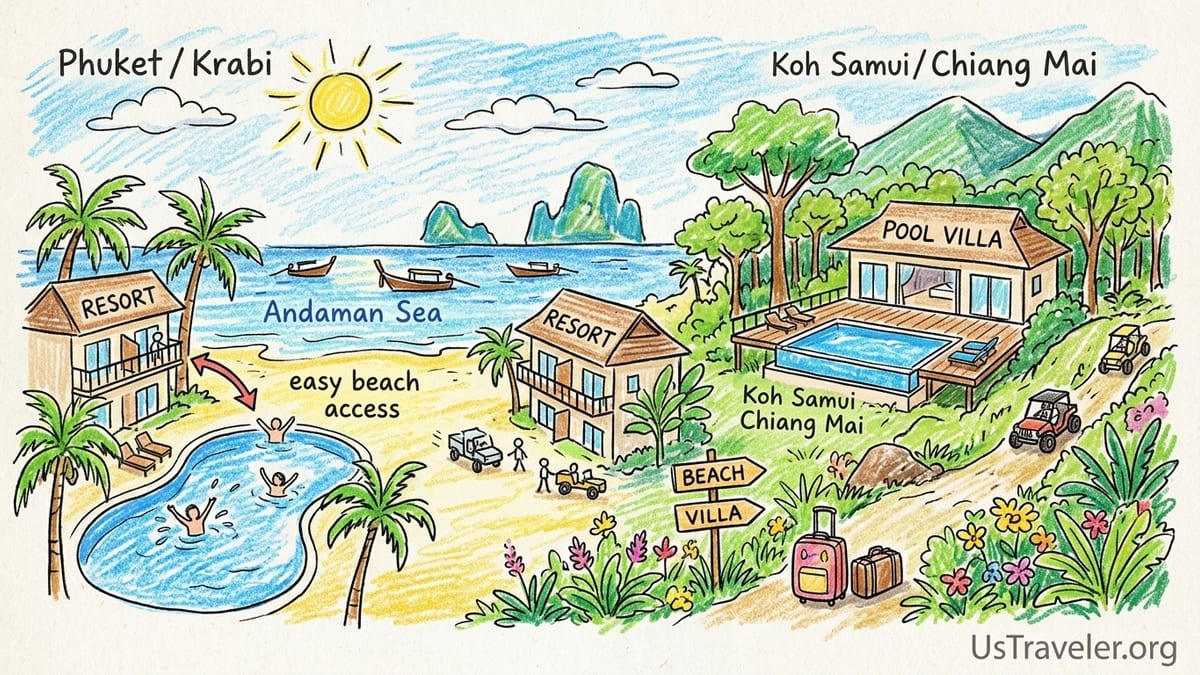
Start with the three variables that change everything: beach quality, transfer logistics, and how much you want to leave the property. A “beachfront” label can still mean crossing a road or using a shuttle in places like Phuket’s busier coastlines, so prioritize resorts where the pool deck, gardens, or main public spaces open directly onto sand if you want true toes-in-the-sand days.
Second, decide whether you want a resort you can treat as a home base with restaurants and nightlife nearby, or a destination hotel where you happily spend most of your time inside the gates. Phuket and Hua Hin can give you resort comfort with plenty of nearby dining, while Khao Lak and parts of Krabi can feel deliberately removed.
Third, be honest about your room type. In Thailand, the jump from “nice room” to “pool villa” can change the entire trip rhythm. If you plan to spend midday at your villa between beach time and dinner, it is worth booking the villa upfront instead of hoping for an upgrade, especially over peak season windows.
Phuket: Beach Access First, Then Pick Your Vibe (Family Lagoon, Romantic Bays, Or Quiet North)
Phuket remains the most flexible “build-your-own” resort destination in Thailand: you can book a true beach holiday with lots of restaurant choice, or a calmer stay where the resort is the main event. For travelers who want wide sand and a resort complex that feels self-contained without being isolated, the Laguna Phuket area around Bang Tao is a practical choice with large beachfront resorts, big pools, and easy transport to beach clubs and casual dining.
If you are booking for direct sand access with a classic Phuket feel, shortlist resorts where you can walk from the pool to the beach without crossing traffic. Examples travelers often compare for this kind of stay include The Surin Phuket on Surin Beach, The Nai Harn overlooking Nai Harn Beach, and Twinpalms Phuket in the Bang Tao area depending on the specific room location and your tolerance for a more social scene.
For a grounded “what you will pay” reality check, Phuket can still deliver resort luxury at a range of price points depending on date and room category. For instance, resorts such as Dusit Thani Laguna Phuket can appear around the mid-hundreds per night on some dates, while higher-demand boutique beachfront properties and villa categories commonly move into higher nightly totals. The key is to price your exact dates and room type, then compare what you are actually buying: beach setup, pool size, and walkability to casual meals versus being locked into hotel restaurants.
Khao Lak: Quieter Beaches, Big Pools, And Destination-Resort Calm
Khao Lak is where many Thailand repeat visitors go when they want the Andaman Sea mood without Phuket’s density. The beaches are long and laid-back, and the resort experience tends to be more about space: larger grounds, fewer outside distractions, and a slower daily pace that works well for couples and families who want “resort time” to be the point of the trip.
For travelers who want a full-service, large-scale beachfront resort with multiple dining options and a strong family-friendly setup, JW Marriott Khao Lak Resort and Spa is a useful benchmark property. It is the kind of resort where pools and dining are a significant part of the stay, including specialty venues such as its Italian beachfront restaurant concept, and the overall scale supports longer stays without boredom.
If your priority is boutique luxury and curated experiences, The Sarojin is a recognized Khao Lak anchor with an emphasis on personalized moments rather than a mega-resort checklist. Real-world examples promoted by the property include an all-day a la carte breakfast served late, private dining setups in secluded locations, spa time designed as a central activity, and day trips on its own boat. In practical terms, Khao Lak’s calm pays off most when you are planning a true reset: fewer day tours, more beach walks, and dinners you do not rush.
Krabi: Railay’s Iconic Escape Vs. Tab Kaek’s Luxury Beachfront Row
Krabi’s best resort stays split into two very different experiences. The first is the “only in Krabi” version: limestone cliffs, boat-only or boat-forward access, and beaches that feel cinematic. The second is the more straightforward luxury beachfront stay along quieter stretches such as Tab Kaek, where the sea view is the daily headline and island-hopping tours are easy to arrange.
For the iconic, geography-driven stay, Rayavadee is defined by where it sits: the Phranang Peninsula at the edge of Krabi’s marine national park, facing multiple beaches that visitors associate with Railay. Transfer planning matters here. The resort’s own guidance describes the journey as a drive from Krabi International Airport to a pier and then a speedboat transfer, which is exactly the kind of logistics you should bake into arrival timing, especially if you land near dusk or with kids.
For Tab Kaek beachfront luxury where villa life and resort dining take over, Banyan Tree Krabi is a notable choice, but it is also a good reminder to check operational notices before you book. For example, some resort pages and booking platforms post specific pool or facility closures for maintenance windows, which can matter a lot if your trip is built around a signature main pool. When you are deciding between Krabi resorts, compare (1) swimmable beach conditions right in front of the resort, (2) whether you will actually use the main pool daily, and (3) how much you want to move around by boat versus staying put with spa and dining.
Koh Samui: Villa-First Holidays, Private Pools, And High-End Seclusion
Koh Samui’s strongest resort stays in 2026 are often “villa trips” rather than “hotel trips.” That means your accommodation is not just where you sleep; it is where you swim, snack, nap, and reset between beach time and dinner. The island also makes it easy to mix a secluded resort base with short drives to night markets, beach clubs, and temples, depending on your location.
For travelers who want a flagship, classic-luxury resort experience with a calm setting, Four Seasons Resort Koh Samui is a consistent reference point, with offers that can apply to 2026 stay windows depending on booking conditions. In practical terms, Four Seasons is best for travelers who will use the resort as a self-contained retreat: beaches, hillside views, polished service, and a stay that is meant to feel removed from the island’s busier corners.
If you are specifically hunting for private-pool villas and a more intentionally secluded feel, Banyan Tree Samui is frequently booked by travelers prioritizing villa privacy. When comparing Samui properties, look carefully at whether your villa is a true private pool setup, how steep the internal resort roads are (a quiet factor that affects how often you walk versus call a buggy), and how easy it is to get to dinner options outside the resort if you do not want to dine in every night.
Hua Hin: Wellness Stays Where The Program Is The Point
Hua Hin is a different Thailand resort proposition: it is not about jungle cliffs or island-hopping, but about routine. It is where you book a wellness stay, actually go to sleep early, drink water, and let the days become structured around treatments, movement, and calmer beach time. It is also one of the easiest “destination wellness” choices for travelers who want a premium program without adding island transfers.
Chiva-Som Hua Hin is the name that comes up most often for travelers who want a true wellness retreat rather than a hotel with a spa. Its 2026 offers highlight a program-style approach, with inclusions like daily treatments (for example Thai massage options and hydrotherapy-style choices), access to facilities, and wellness cuisine, with offer validity and booking windows spelled out in its current seasonal promotions. Because packages and inclusions can change by date and resident status, the most important booking move is to confirm what is included for your exact travel period: treatments per night, consultations, and any restrictions that might apply under health regulations.
If your idea of wellness is lighter touch, Hua Hin also supports “wellness-adjacent” resort stays where the spa is excellent but you are not committed to a full retreat schedule. In that scenario, compare beachfront access, pool design (quiet lap-friendly versus family-friendly), and how quickly you can transfer from Bangkok. The closer you are to town, the easier it is to mix morning spa time with casual dinners and markets.
Chiang Mai: Countryside Retreats, Riverfront Luxury, And The Best Split-Stay Strategy
Chiang Mai is where Thailand’s resort story pivots from beach to landscape. The best stays are often retreats: you book for space, air, and a feeling of being in northern Thailand rather than simply “at a nice hotel.” In 2026, Chiang Mai also continues to reward the split-stay approach: a countryside resort for serenity plus a city or riverfront hotel for temples, cafes, and night markets.
For a countryside retreat with a strong sense of place, Four Seasons Resort Chiang Mai is built around rice paddies and mountain views, with accommodation designed to feel like a quiet sanctuary. It also regularly runs stay windows and resort-credit style offers across parts of 2026, which can matter if you plan to spend on spa treatments and on-property dining rather than day-tripping every day.
For a more central, city-connected luxury base, Anantara Chiang Mai Resort sits on the Mae Ping River and works well if you want to step out for food, galleries, and temples without long drives. A practical itinerary many travelers like is two or three nights in town for Chiang Mai’s energy, then two or three nights in the countryside for slow mornings and restorative spa time. It is an easy way to avoid the common mistake: booking a remote retreat and then spending your whole trip commuting back to the Old City.
The Takeaway
Thailand’s strongest resort market in 2026 is not one coastline. It is a chain of distinct experiences stretching from Phuket’s choose-your-own beach week to Khao Lak’s calm, Krabi’s dramatic landscapes, Samui’s villa-first escapes, Hua Hin’s program-driven wellness, and Chiang Mai’s retreat culture. The smartest booking strategy is to pick the experience first, then buy the details that shape your days: true beach access, a pool you will actually use, spa depth, restaurant variety, transfer simplicity, and the level of isolation you want when the sun goes down.
If you want one practical rule to guide your shortlist: Phuket is for flexibility, Khao Lak is for quiet, Krabi is for scenery and boat access, Samui is for private-pool villa life, Hua Hin is for structured wellness, and Chiang Mai is for a split stay that balances culture with calm.
FAQ
Q1. What is the best Thailand resort destination for a first-time beach trip in 2026?
Phuket is usually the easiest first choice because you can match the beach and resort style to your budget, and you have plenty of dining and day-trip options without complicated transfers.
Q2. Which area is better for a quieter Andaman Sea stay: Phuket or Khao Lak?
Khao Lak is generally quieter and more resort-focused, with long beaches and fewer outside distractions, while Phuket offers more variety and nightlife but can feel busier depending on the beach.
Q3. In Krabi, should I choose Railay-area resorts or Tab Kaek Beach resorts?
Choose Railay-area stays if you want dramatic cliffs and a geography-driven experience with boat transfers, and choose Tab Kaek if you want a more straightforward luxury beachfront resort with easier road access.
Q4. Are private-pool villas worth it in Koh Samui?
They can be, especially if you expect to spend midday at your accommodation. A private pool changes the daily rhythm and can reduce the need to compete for loungers at main pools during peak periods.
Q5. What should I check before booking a “beachfront” resort in Phuket?
Confirm that the resort’s main areas open directly onto the sand and that you are not crossing a road or relying on a shuttle. Also verify whether your room category has the view and access you expect.
Q6. What makes Hua Hin different from other resort areas in Thailand?
Hua Hin is especially strong for wellness stays and routines. It is less about island scenery and more about treatments, fitness, calm beachfront time, and easy access from Bangkok.
Q7. Is Chiva-Som Hua Hin more of a hotel or a wellness retreat?
It is designed as a wellness retreat, where package structure and inclusions such as daily treatments and facility access are central to the stay rather than optional add-ons.
Q8. How far outside Chiang Mai is the countryside resort experience?
Countryside resorts can feel meaningfully removed from the Old City and riverfront areas, which is why many travelers prefer a split stay: time in town first, then a retreat stay for quiet.
Q9. Do Thailand resorts typically offer airport transfers?
Many higher-end resorts can arrange transfers, but the type varies by destination. Krabi’s Railay-area resorts may involve pier and boat segments, while Phuket, Hua Hin, and Chiang Mai are usually car-based.
Q10. What is the most common booking mistake travelers make with Thailand resorts?
Choosing a resort for the brand name without matching it to the trip style, then realizing the beach, isolation level, or transfer logistics do not fit how they want to spend their days.