


Central Thailand is where the country’s grandest history and most everyday scenes overlap: brick chedis rising from river plains, commuter boats cutting across the Chao Phraya, vendors folding awnings as a train glides through a market, and small islands where pottery kilns still shape local life. This guide is built around the region’s best-known day-trip anchors, Ayutthaya, Bang Pa-In, the floating markets and Maeklong Railway Market, Ko Kret, Phra Pathom Chedi, and Lopburi, but organized the way travelers actually experience them: by history, rivers, markets, food, and short trips that can be mixed and matched from Bangkok.
History First: Ayutthaya’s Temple Ruins As A Living Timeline
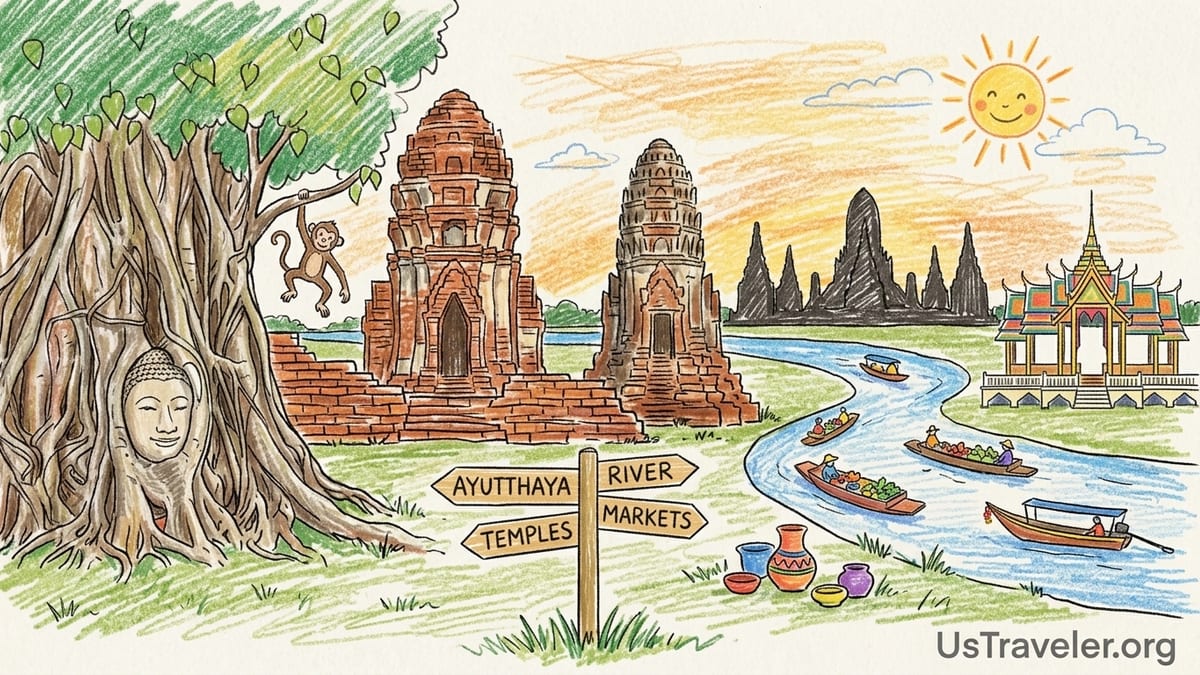
Ayutthaya is the kind of place where your first “wow” moment arrives fast: the sandstone Buddha head framed by bodhi roots at Wat Mahathat, the elegant three chedis of Wat Phra Si Sanphet, and the riverside silhouette of Wat Chaiwatthanaram that looks tailor-made for late-afternoon light. Practically, it helps to know that there is no single all-access park gate. Most major ruins are ticketed individually, and many of the headline sites commonly charge foreign visitors about 50 baht per temple, with hours typically posted around 08:00 to 18:30 for several of the big-ticket ruins. A combined ticket covering six major sites is sold for 220 baht and is usually valid for 30 days, which can be a money-saver if you plan to hit the full set rather than just two or three temples.
Build your day around contrasts. Start on the city island with Wat Mahathat and nearby ruins while the air is still manageable, then pivot to Wat Phra Si Sanphet for the royal-temple scale, then cross the river later for Wat Chaiwatthanaram when the light softens. If you want one active temple that feels different from the red-brick ruins, Wat Yai Chai Mongkhon is a common add-on and is often listed at a lower ticket price than the major UNESCO-era ruins, while some sites such as Wat Lokayasutharam are typically open and donation-based.
On the ground, the real skill is pacing. Ayutthaya looks compact on a map, but the heat and distances add up quickly if you try to “do everything.” A practical approach is to pick four temple stops you truly care about, keep a little buffer for unexpected closures at ticket windows, and save your energy for the final golden-hour stop rather than burning out by mid-afternoon. You will get more from two unhurried temple compounds than from six rushed photo check-ins.
Bang Pa-In Palace: A Royal Detour That Changes The Mood
South of Ayutthaya, Bang Pa-In Palace is a sharp change of scene: manicured grounds, a photogenic pavilion on a pond, and a mix of Thai, Chinese, and European-influenced buildings that feel more like a landscaped estate than an archaeological site. It is also one of the easiest “upgrade stops” for an Ayutthaya day, especially if you want shade, gardens, and a different kind of history without committing to a second big temple circuit.
For budgeting, the widely posted foreigner entry fee is 100 baht, and the palace is commonly listed as open daily roughly 08:00 to 16:00, with the last ticket sales often noted around 15:30. Dress standards are enforced more strictly than many temple compounds, so plan on covered shoulders and long pants or a knee-covering skirt. If you arrive underdressed, some visitors report that loan garments are available with a refundable deposit, but it is easier to wear something compliant from the start, especially if you are combining multiple sites in one day.
Bang Pa-In is big enough that the optional golf cart rental can be more than a gimmick. A commonly quoted rate is roughly 400 to 450 baht for the first hour, with additional time priced lower per hour after that. In practice, it makes sense for couples or small groups who would rather glide between buildings than walk long loops in midday sun. If you are visiting in the morning or in cooler season, walking can be perfectly fine and feels more serene.
River Experiences: Slow Travel By Water In Bangkok And Beyond
If you want Central Thailand to feel less like a checklist, put at least one river segment into your plan. In Bangkok, the public Chao Phraya boat system is not a “tour,” it is daily transport, and riding it is one of the cheapest ways to turn logistics into an experience. If you board an orange-flag boat in the central area, the fare is commonly a flat 17 baht, and the ride gives you an open-air look at temples, hotels, and working piers you simply do not see from the street.
For Ko Kret day trips, travelers sometimes try to combine river rides with local ferries. It is worth knowing that service patterns can change. The Chao Phraya Express Boat company has posted service notices in 2026 about the Pak Kret to Sathorn route being out of service, which can affect “all-river” plans. The practical workaround is to treat the boat as a scenic segment where it fits, and be ready to connect by taxi or rideshare for the last stretch to the Ko Kret ferry crossing rather than assuming a single continuous river route will be running on the day you go.
In Ayutthaya, water also shapes the day even if you do not take a formal cruise. The most iconic temple views are often riverside, and simply crossing to the west bank to see Wat Chaiwatthanaram reframes the city as an island-and-river landscape rather than a set of ruins. If you are choosing between “more temples” and “more atmosphere,” a short riverside sunset stop frequently delivers more mood per minute than another mid-afternoon brick complex.
Markets On Water: Floating Markets With Realistic Expectations
Thailand’s floating markets can be memorable, but they are easiest to enjoy when you go in with the right expectations. Damnoen Saduak is famous, early, and busy. Many guides recommend arriving in the morning, with a commonly suggested sweet spot around 07:00 to 11:00, when the heat is lower and the most photogenic boat traffic is still moving through the canals. Importantly, there is typically no gate fee to enter the market area itself, so your core costs are transport and any boat ride you choose to take.
Boat pricing is where travelers get burned, so it helps to anchor your negotiations with real reference numbers. Some recent market guides cite an “official” reference range of about 150 to 300 baht per person per hour for paddle-boat style rides, while long-tail boat loops are often quoted around 300 to 600 baht per boat depending on route and bargaining. The practical tactic is simple: go to the main pier, ask the total price and the duration before you step in, and be comfortable walking away if the first quote is wildly inflated.
To make it feel less like a theme-park lap, choose a goal beyond “ride a boat.” For example, plan to eat one meal directly from a vendor boat, then do a short canal ride, then spend your walking time buying fruit you can recognize and price-check quickly: mango, pomelo, coconut, and small snacks where you can see the cost before ordering. When you treat the market as breakfast plus a short ride rather than a half-day excursion, it is easier to leave satisfied instead of exhausted.
Maeklong Railway Market: Timing The Train, Not Just The Photo
Maeklong Railway Market works best when you plan around the train, because the defining moment is brief: stalls pull back, awnings fold, and a train rolls straight through the center corridor. The market itself is interesting even without the train, but if you arrive at random, you can easily miss what you came for. Several tourism materials and updated guides list train arrivals through the market at approximately 06:20, 09:00, 11:30, and 15:30, which gives you multiple chances to catch the moment in a single day.
To keep it grounded and safe, watch how locals position themselves. The best photos are usually not taken with a toe on the rail, but from the edge where you can show the narrowness and the controlled chaos. If you want the “full experience,” some travelers ride segments of the Maeklong line and arrive by train into the station, stepping off into the market scene rather than approaching it like an isolated attraction.
As a pairing, Maeklong often sits naturally with a floating market day. The most practical way to keep the day from becoming a blur is to pick one market for a boat ride and one for walking and snacks, rather than forcing long boat tours at both. If you do Damnoen Saduak early, you can aim to be at Maeklong for a late-morning train, then keep the afternoon flexible for a riverside dinner stop back in Bangkok.
Ko Kret And Nakhon Pathom: Pottery Lanes, Mon Food, And A Giant Chedi
Ko Kret is the antidote to Bangkok’s speed. It is a small island community in the Chao Phraya where cycling lanes and footpaths lead to temples, small pottery workshops, and weekend market energy that feels local rather than staged. The Tourism Authority of Thailand highlights Ko Kret for cultural wandering, including cycling or taking small boats around the island, and it is a day trip that can feel surprisingly restorative if your Bangkok itinerary has been heavy on malls and traffic.
The most satisfying Ko Kret plan is a simple one: arrive late morning, walk the market lanes, then build your afternoon around one or two specific “maker” stops. Terracotta and ceramics are the signature here, so instead of buying a generic souvenir, look for pieces you can actually use, like a small cup, a plate, or a planter, and ask how it was made. Then eat like you are in a neighborhood, not a tourist zone: order a plate of pad thai or grilled snacks from a busy stall, and try a local dessert you have not seen elsewhere. Recent Thai Airways Sawasdee content has also highlighted Ko Kret’s Mon cuisine and ingredients associated with the island, which is a good nudge to try something beyond the standard Bangkok street-food hits.
From Ko Kret, it is easy to connect the “small island” mood to a “big monument” day by adding Nakhon Pathom’s Wat Phra Pathom Chedi. The chedi dominates the town center and is one of those places that feels immediately significant even if you do not know the full history. For practical planning, some visitor guides describe the outer temple grounds as open to enter, with a separate ticket, often cited around 60 baht, to access the inner cloister around the chedi. If you arrive by train, the Nakhon Pathom station is commonly described as a short walk from the chedi area, making it a straightforward, low-friction day trip without complicated transfers.
Lopburi’s Historic Quarter: Khmer Ruins, King Narai’s Legacy, And Street-Smart Monkey Etiquette
Lopburi is often marketed as “the monkey town,” but the historic quarter is the real reason to go. The old-town core around the train station stacks multiple eras into a compact walk: Khmer-influenced prang towers, Ayutthaya-era layers, and King Narai’s 17th-century palace story that ties Lopburi to Thailand’s diplomatic past. If you are already doing Ayutthaya, Lopburi makes sense as the next step north for travelers who want a second historical city without committing to a far-flung itinerary.
Phra Prang Sam Yot is the headline stop: three linked laterite prangs in the Bayon style, and one of the most recognizable Khmer-era silhouettes in Central Thailand. Some current visitor guides mention a combined ticket around 150 baht that can cover multiple key sites in town, which is a smart buy if you plan to spend more than a quick hour. Build the walk so you hit the ruins first, then cool down in a cafe or shaded museum space, then continue to additional monuments.
The monkeys are real, and the best advice is unglamorous: do not carry visible food, keep your bag zipped, and avoid dangling items like plastic bags, sunglasses on your head, or open snacks in hand. In practice, this means your “market snack” moment is better saved for after you have finished the monkey-heavy zone. If you treat Lopburi as a history walk with a wildlife factor, not a wildlife attraction with some ruins, it becomes a much richer day.
The Takeaway
Central Thailand rewards travelers who organize their days by rhythm, not by pin count. Start with Ayutthaya’s big historical statements, then shift moods at Bang Pa-In’s gardens, slow down on the river where daily life is the point, and treat markets as a timed experience where one or two well-chosen moments beat hours of wandering. Add Ko Kret for craft and calm, Phra Pathom Chedi for monument scale, and Lopburi for a compact, walkable historic quarter that feels different from Ayutthaya rather than redundant.
If you plan one “early morning” day for markets and trains, one “history and sunset” day for Ayutthaya, and one “slow culture” day for Ko Kret and Nakhon Pathom, you will cover the region’s classics while still leaving space for the small, memorable details: a ferry crossing, a pottery kiln, a bowl of noodles, and the sudden hush that falls when a train inches through a market corridor.
FAQ
Q1. How much should I budget for Ayutthaya temple entry fees?
Many major ruins commonly charge foreign visitors about 50 baht per temple, and a six-site combined ticket is sold for 220 baht if you plan to visit those specific sites.
Q2. Is there one main ticket for Ayutthaya Historical Park?
No single park-wide gate ticket is typical. Most sites are ticketed individually, and the combined pass only covers a specific set of six major temples.
Q3. What are the key rules for visiting Bang Pa-In Palace?
Plan for a strict dress code with covered shoulders and long pants or a knee-covering skirt, and aim to arrive well before late afternoon because ticket sales are often reported to stop around 15:30.
Q4. What does Bang Pa-In Palace cost and when is it open?
The widely posted foreigner entry fee is 100 baht, and hours are commonly listed around 08:00 to 16:00 daily, though schedules can change on royal holidays.
Q5. What time should I go to Damnoen Saduak Floating Market?
Morning is best. Many guides recommend arriving early, with the liveliest period often described as roughly 07:00 to 11:00.
Q6. What is a fair price for a boat ride at Damnoen Saduak?
Recent guides cite paddle-boat reference pricing in the range of about 150 to 300 baht per person per hour, while some long-tail boat loops are often quoted around 300 to 600 baht per boat, depending on route and bargaining.
Q7. What are the Maeklong Railway Market train times?
Several updated tourism materials list train arrivals through the market at approximately 06:20, 09:00, 11:30, and 15:30, giving you multiple chances to catch the fold-back moment.
Q8. Is Ko Kret good on weekdays or only weekends?
Ko Kret is visitable any day, but it is generally more animated on weekends when more stalls and local visitors tend to appear, while weekdays can feel quieter and more residential.
Q9. Does Wat Phra Pathom Chedi have an entry fee?
Some visitor guidance describes the general temple area as open to enter, with a separate ticket, often cited around 60 baht, for the inner cloister around the chedi.
Q10. How do I handle Lopburi’s monkeys around Phra Prang Sam Yot?
Keep food out of sight, zip your bag, and avoid carrying loose items. Do your snacking after you leave the monkey-heavy area to reduce hassles.