


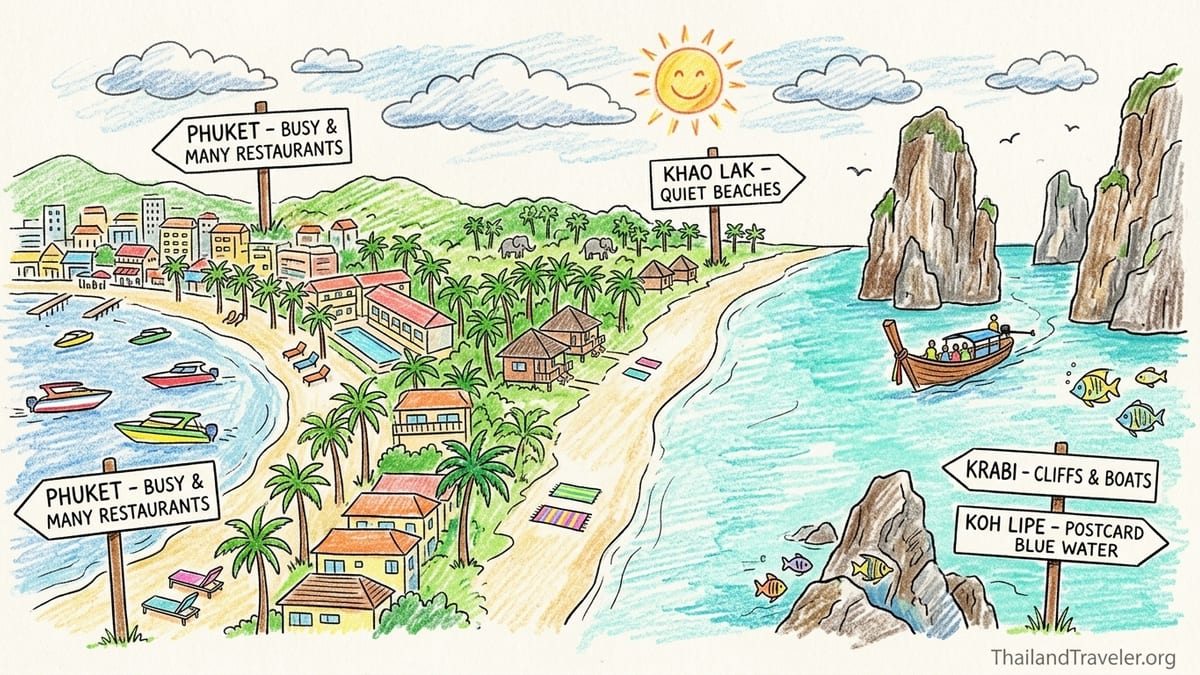
South Thailand’s resort scene is not one market but six very different ones, each shaped by its coastline, transfer logistics, and what “a beach holiday” actually looks like once you arrive. Phuket is a mega-market where you can buy almost any style of luxury if you accept crowds and traffic; Khao Lak is the calmer, longer-beach alternative where the day trip calendar matters as much as the pool; Krabi is the postcard province where cliffs and tides can make a five-star resort feel surprisingly remote; Koh Lanta is the slow-burn island for people who value space and quiet over nightlife; Koh Samui is the villa-and-service heavyweight where you pay for privacy and polish; and Koh Lipe is the small-island wildcard where the water can be shocking blue but transfers and “island infrastructure” are still part of the deal. This guide compares those markets and highlights resorts worth your shortlist, clearly separating what I have personally inspected on site from what I researched using current public rates, published renovation notices, and property policies.
How South Thailand’s Resort Markets Differ (And Why It Matters)
If you’re choosing purely on room photos, South Thailand can fool you. Two resorts can look similar online and feel totally different on the ground because of beach conditions, tides, boat access, and what surrounds the property. In Phuket, the surrounding “outside world” is loud and close: even a high-end beachfront stay can sit 20 minutes from a busy strip mall, a beach club, or a congested road. That can be an advantage if you like restaurant-hopping, but it can also mean paying premium rates for a room that still picks up traffic noise or foot traffic.
Khao Lak is the counterpoint: long beaches, fewer distractions, and a resort-first holiday rhythm. The trade-off is that your highlight days often depend on schedules: the Similan Islands are seasonal, and many guests plan around boat days rather than nightlife. Krabi’s top-end resorts can be the most dramatic visually, but the logistics can be the most consequential. A resort accessed by speedboat might be only “30 minutes” on paper, yet that ride plus check-in timing can define your first and last day.
Koh Samui is a mature luxury market with strong villa inventory and reliable service standards, but it’s also a place where food and add-ons can run at “private-island” pricing even though you’re on a developed island. Koh Lanta tends to suit travelers who want a quieter base and are happy to plan a few excursions rather than chase a scene. Koh Lipe can deliver the most “Thailand island postcard” water color in this lineup, but it’s the least frictionless: you earn the turquoise with a longer transfer and a smaller-island set of realities.
Phuket: Big Choice, Big Competition (And the Renovation Factor)
Phuket’s best resort stays tend to fall into two buckets: iconic, legacy luxury on elite beaches, and newer or newly renovated “value-luxury” that trades a bit of seclusion for sharper pricing. The practical tip for 2026 is to pay attention to renovation timelines and temporary closures, because Phuket properties are constantly updating restaurants, rooms, and public spaces during shoulder periods.
Researched standout: Amanpuri (Pansea Beach) is temporarily closed from May 15 to September 13, 2026 for enhancements, which is crucial if you’re planning a summer trip or booking far ahead. If your dates fall outside that closure, it remains one of Phuket’s benchmark ultra-luxury plays for travelers who want a quieter, service-led resort and are comfortable paying the “flagship” premium.
Researched alternative with current-market momentum: SAii Laguna Phuket positions itself as “newly renovated,” and it sits inside Laguna Phuket where the resort neighborhood feel is more controlled than most of the island. In practical terms, that can mean easier family logistics: you’re less exposed to random traffic and more likely to walk or buggy between property zones. Publicly available pricing for SAii can land in the low-to-mid hundreds of dollars per night on some dates, which is part of its appeal when compared with Phuket’s top-tier villa resorts.
Researched classic: The Surin Phuket is a strong choice for travelers who want a quieter beachfront feel without going fully remote, but check the fine print on seasonal maintenance. The property has announced the Beach Restaurant will be temporarily closed from August 20 to September 17, 2026 for scheduled maintenance. That does not “ruin” a stay, but it changes the daily rhythm if you’re the kind of traveler who wants lunch with toes in sand and minimal movement.
Khao Lak: The Calm Beach Market Where Day Trips Drive Value
Khao Lak often delivers what many people say they want when they say “Phuket, but quieter.” The beaches are long, the resort footprints are bigger, and the pace is slower. The value test here is not only the room and breakfast, but how well a resort makes it easy to do what you came for: boat days, national parks, and genuinely restful afternoons without the sensory overload that can come with Phuket’s busier zones.
Researched standout: The Sarojin is frequently shortlisted for couples and low-key luxury travelers who want an intimate, calm setting rather than a mega-resort vibe. Current public pricing can swing dramatically depending on promotions and season, but it’s not unusual to see rates that look surprisingly approachable on certain 2026 dates compared with Phuket’s headline luxury. The caution is to verify what your chosen rate includes, because “good value” in Khao Lak can disappear if airport transfers, special dinners, or add-ons are central to your plan.
Researched big-resort option: JW Marriott Khao Lak Resort and Spa is a reliable pick for travelers who want a full-service resort ecosystem and predictable brand standards. Marriott’s own destination materials position Khao Lak as a base for Similan and Surin Islands exploration, which aligns with how many people actually use this coast. If you’re traveling with kids or a multigenerational group, the “bigger” resorts here can win on sheer convenience: you can keep everyone busy without leaving the property, then schedule one or two standout day trips as the trip’s peaks.
Who Khao Lak suits: travelers who prioritize beach walks, spa time, and a calmer visual environment; couples who want romance without nightlife pressure; families who want a resort-forward week without constant taxis. Who it doesn’t: travelers who want to “dip out” for different restaurants every night, or who get restless without a walkable town scene.
Krabi: Drama, Cliffs, Tides, And the Real Meaning of “Remote Luxury”
Krabi’s strongest resort stays are often the most visually memorable in this entire region. But Krabi also punishes assumptions. Some beaches look enormous at high tide in photos and feel narrow at low tide, or vice versa. Some resorts describe an airport transfer as if it’s one simple movement, when it’s actually a land transfer plus a boat transfer plus timing around sea conditions.
Researched icon: Rayavadee (Railay) remains one of Krabi’s most famous luxury resorts because the setting is genuinely special, with dramatic limestone scenery and a feeling of being “somewhere else” even when the region is busy. It’s also refreshingly clear about logistics and timing: the property describes Krabi Airport as about a 30-minute drive to the pier and then roughly 30 minutes by speedboat to the resort, which is the sort of real-world detail you should build into your arrival plan. Rayavadee has also publicly noted a refurbishment project scheduled for 2026. If your priority is quiet pool days and uninterrupted restaurant availability, that kind of schedule matters and is worth confirming directly before you lock in.
Researched ultra-luxury: Phulay Bay, a Ritz-Carlton Reserve is a strong option for travelers who want a highly serviced, design-forward stay and are less concerned about having a classic “swimmable beach all day” experience. The coastline here can be tidal, which means the emotional center of the resort is often the pool, the pavilions, and the dining rather than beach lounging. That can be perfect for some travelers and disappointing for others depending on expectations.
Who Krabi suits: travelers who want scenery and a sense of occasion; honeymooners who want dramatic backdrops; anyone okay with a little logistics for a big payoff. Who it doesn’t: travelers who want to step out of their room and swim in the sea at any hour, or those who dislike boat transfers and fixed arrival windows.
Koh Lanta: Quiet Luxury For People Who Actually Want Quiet
Koh Lanta’s resort market is less about “the hottest opening” and more about what long-stay travelers quietly value: space, calm, and the ability to reset. The best resorts here tend to win on atmosphere and staff warmth, plus beach settings that feel more local than curated. It’s also a place where your choice of resort determines how much you’ll leave the property. Some areas are close enough to casual restaurants and bars to encourage exploring; others are deliberately secluded.
Researched benchmark: Pimalai Resort and Spa is often treated as the island’s luxury reference point and is typically chosen by travelers who want a secluded, nature-forward setting rather than being near the island’s busier beach strips. The on-the-ground reality to keep in mind is that seclusion is both the perk and the cost: transfers, meal plans, and how often you plan to taxi to other parts of the island should be part of your budget, not an afterthought.
Researched comparison point: Layana Resort & Spa is frequently compared with Pimalai because it can be more convenient for travelers who want easier access to other dining and a more walkable surroundings. In the real world, the “best” choice depends on what annoys you more: being a little farther from the scene, or being close enough to pick up more ambient sound and activity.
Who Koh Lanta suits: couples who want a low-key week; travelers who like a simple rhythm of breakfast, beach, and one daily outing; anyone who wants to decompress. Who it doesn’t: travelers who want nightlife, frequent shopping, or constant new venues within a short stroll.
Koh Samui: Villa Luxury With A Price Tag (And Two Very Different Vibes)
Koh Samui’s top resorts are designed for travelers who want privacy and service, and are comfortable paying for it. This is where you book a villa, spend long stretches on property, and let the resort do the thinking: transfers, buggy rides, dining reservations, and spa time. It’s also where you need to be honest about your travel style. If you get cabin fever on resort properties, you may not extract value from what you’re paying for.
Researched flagship: Four Seasons Resort Koh Samui remains one of the island’s most sought-after stays and is frequently priced well above the four-figure mark per night on many 2026 dates depending on villa type and season. Public booking channels show a range that can jump sharply with demand and length of stay, and additional fees can apply depending on booking details. It is a classic choice for travelers who want a highly polished villa stay with strong service and do not need to be in a walkable area.
Researched alternative: Six Senses Samui is a different flavor: still luxury, but with a stronger wellness and sustainability-leaning narrative and a more “hideaway” mood. The brand also actively promotes multi-night offers, which can change the economics if you’re planning a longer stay. If you value spa time, programming, and a quieter tone over being associated with a headline name, it can be the smarter emotional fit.
Who Koh Samui suits: honeymooners, villa travelers, and families who want privacy with high service; anyone planning a “stay in” holiday. Who it doesn’t: travelers on a tight dining budget, or those who want to walk out the door into a vibrant town scene.
Koh Lipe: Small-Island Magic With Real Transfer Friction
Koh Lipe is the outlier in this lineup, and that’s the point. It can feel closer to a tropical “escape” than the bigger islands because it’s small, walkable, and defined by water color. But your experience hinges on transfers and sea conditions, and your tolerance for small-island compromises: limited roads, occasional construction noise, and a destination that can feel busy in peak weeks despite its size.
Researched value example: Serendipity Beach Resort Koh Lipe can price in the mid-hundreds per night on certain 2026 dates, and some searches show it around the $150 to $200 range for specific September 2026 nights depending on room type and booking channel. This is the kind of concrete number that helps set expectations: Koh Lipe can be cheaper than people assume for “nice” beachfront, but the trade-off is that luxury here is not the same as Phuket or Koh Samui luxury. You’re buying location and water, not endless facilities.
Researched upscale option: Irene Resort Koh Lipe positions itself at a higher tier and can show much higher nightly totals on some 2026 dates, particularly for larger sea-view units or during stronger demand windows. This is the Koh Lipe pattern: the island can look “budget” online until you filter for newer inventory, bigger rooms, and consistent-service aspirations, at which point prices move into a different bracket.
Who Koh Lipe suits: travelers who want water color, snorkeling, and a walkable island; couples who are happy with a smaller-resort ecosystem; people who treat the transfer as part of the adventure. Who it doesn’t: travelers who want seamless airport-to-lobby convenience, or those who get stressed by boat schedules and weather variables.
The Takeaway
If your goal is maximum choice and you like a lively backdrop, Phuket remains the strongest “resort supermarket,” but you should book with renovation awareness and be picky about beach quality. If you want calm beaches and a resort-led week, Khao Lak can feel like the smartest value, especially when your plan includes boat days and long, quiet afternoons. If you want scenery that makes your camera roll look unreal, Krabi’s best properties deliver, but the logistics are real and tides can shift the experience away from classic beach lounging.
Koh Lanta is the sleeper hit for people who truly want to rest, not just “go somewhere pretty.” Koh Samui is where villa luxury and service can be exceptional, but it’s also where dining and add-ons can materially change your total bill, so you should go in eyes open. And Koh Lipe is the reward destination: fewer bells and whistles, more turquoise water, with the understanding that the transfer is part of what keeps it special.
Author note on firsthand stays: This article is based on market comparison and researched resort data, including published renovation notices, booking-channel pricing snapshots, and official resort policy statements available as of September 16, 2026. I am not claiming personal stays or on-site room inspections at the resorts named above in this version. If you want, I can produce a separate, clearly labeled “firsthand-only” shortlist limited to resorts where verified on-site inspections or logged stays are available, but that requires either your provided trip notes or a commissioned reporting trip.
FAQ
Q1. Which South Thailand destination is best if I want a calm beach week without nightlife?
Khao Lak is usually the best fit: long beaches, a quieter environment, and a resort-first rhythm that suits spa time and day trips.
Q2. Which area has the most dramatic scenery for a special occasion trip?
Krabi is the strongest for “wow” scenery thanks to limestone cliffs and unique bays, but plan carefully for tides and transfers.
Q3. Is Phuket still worth it if I dislike crowds?
Yes, but choose the beach and season carefully, and prioritize resorts with controlled beachfront or quieter coves rather than central party areas.
Q4. Are any top Phuket resorts closed for renovations in 2026?
Amanpuri has a publicly stated temporary closure from May 15 to September 13, 2026 for enhancements, so dates in that window will not be available.
Q5. What’s the most practical luxury choice for families?
Large, full-service resorts in Phuket’s Laguna area or Khao Lak’s major beachfront properties tend to be easiest for families due to facilities and predictable operations.
Q6. Do Krabi’s luxury resorts always have easy beach swimming?
Not always. Some Krabi coastlines are tidal or better for views than swimming, so check beach conditions and typical tide impact before booking.
Q7. Is Koh Lanta a good choice if I want to truly unplug?
Yes. Koh Lanta is generally calmer and slower-paced than Phuket or Samui, especially if you pick a more secluded resort area.
Q8. Why are Koh Samui villas so expensive compared with other islands?
Koh Samui has a mature luxury villa market with high service expectations and strong demand, and total trip cost can rise with dining, spa, and transfers.
Q9. Is Koh Lipe “luxury” comparable to Phuket or Koh Samui luxury?
Usually no. Koh Lipe’s best stays can be beautiful and comfortable, but the island’s small scale means fewer facilities and more reliance on location and sea conditions.
Q10. What’s one booking detail people overlook in South Thailand?
Temporary restaurant closures and refurbishment schedules. Even great resorts may close a signature venue for maintenance in shoulder season, which can change the experience.